
Stand at the end of a long hallway and the walls seem to lean toward each other, shrinking into a point somewhere past the far door. Nothing is actually shrinking. Your eyes are recording flat, two-dimensional light patterns on your retina, and your brain is doing something remarkable with that flat information: building a 3D world out of it. Linear perspective psychology studies exactly this — how a trick borrowed from Renaissance painters reveals the actual computations your visual system runs every waking moment.
Linear perspective psychology refers to how the brain uses converging lines and shrinking objects in a scene to judge distance and depth. Parallel lines, like train tracks or hallway walls, appear to meet at a single point as they recede — and the brain reads that convergence as a reliable signal of “farther away.”
The Science Behind the Illusion
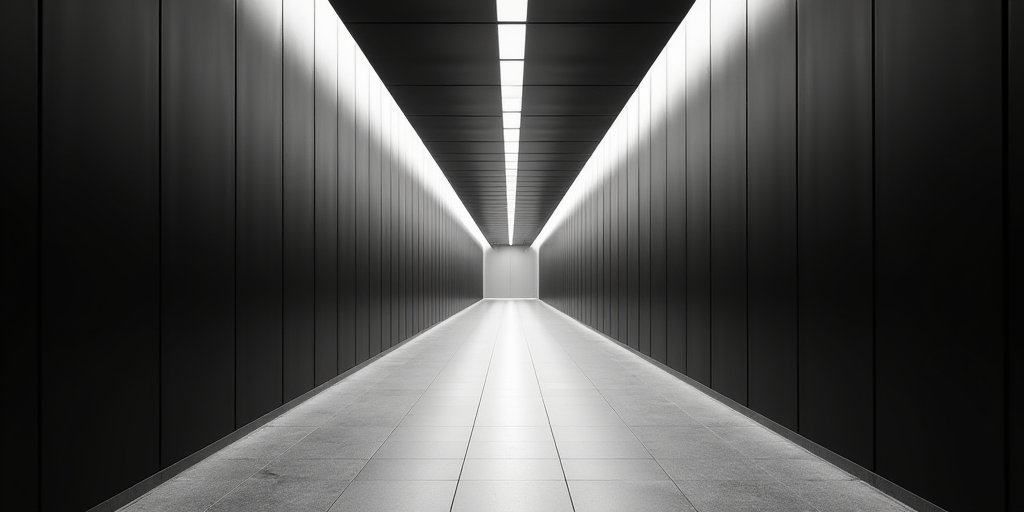
Linear perspective was formalized as an artistic technique by Filippo Brunelleschi in 15th-century Florence, but the brain had been using it as a survival tool long before anyone painted a vanishing point. It’s classified as a monocular depth cue — one of several tricks (alongside relative size, texture gradient, and occlusion) that let a single eye estimate distance without needing binocular vision at all.
Think of your visual cortex as a detective working with only flat photographs, forced to infer a three-dimensional crime scene from clues in the image. Converging lines are one of its favorite clues, because in the real world, parallel lines only appear to converge when they’re stretching away from you. The common misconception is that depth perception mainly relies on having two eyes. In truth, people with vision in only one eye still perceive depth quite well, largely because linear perspective and other monocular cues do most of the heavy lifting.
Where This Shows Up Every Day

Driving at Dusk
Marcus is merging onto the highway as the sky dims, and the lane markings ahead seem to funnel into a single glowing point on the horizon. His brain uses that convergence to instantly judge how much road is left before the curve. He never notices he’s doing geometry at 65 miles per hour — the calculation happens beneath conscious awareness, which is exactly why it feels like “just seeing,” not inferring.
Judging a Room’s Size
Priya walks into a narrow apartment with a hallway mirror at the far end, and for a half-second the space feels deeper than it is. Interior designers exploit linear perspective deliberately, using converging floor patterns or receding shelving to make rooms feel larger. She misses the manipulation because the brain treats perspective cues as raw fact, not as something staged.
Looking at a Photograph
Dan flips through old vacation photos and feels a pull of depth in a shot of a pier stretching into the ocean, even though he’s staring at a flat piece of paper. The converging railings trigger the same depth-processing machinery used for real 3D scenes. He forgets he’s looking at ink on paper because perspective cues override the flatness cue almost completely.
Where It Gets Complicated
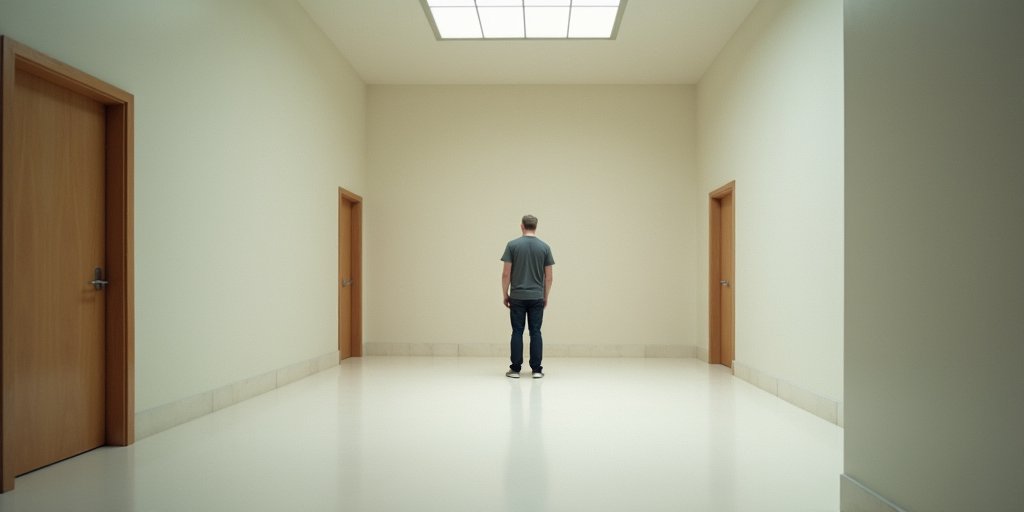
What most explanations miss is that linear perspective isn’t a universal human default — it’s partly learned. Cross-cultural research, including classic studies by psychologist Jan Deregowski, found that people raised in environments with little exposure to perspective-drawn images (photographs, framed art, Western-style illustration) sometimes interpret converging-line drawings very differently than people raised surrounded by them. This challenges the popular narrative that depth cues like this are hardwired and identical across all humans.
There’s also a neuroscience wrinkle: the brain doesn’t process linear perspective in isolation. It’s weighed against competing cues like shading and object familiarity, and when those cues conflict — as in the famous Ames room illusion — perspective often wins even when it produces a wildly wrong answer.
How to Notice Linear Perspective Shaping What You See
Here’s how to recognize when this depth cue is quietly doing work in your daily perception:
- You misjudge distances in unfamiliar spaces: You feel surprised by how close or far something actually is once you walk toward it, especially in symmetrical hallways or open fields.
- You find certain rooms or paintings “pull you in”: You notice a visceral sense of depth or spaciousness looking at a photo, painting, or hallway with strong converging lines.
- You get disoriented in perspective-distorted spaces: Funhouse rooms, forced-perspective tourist photo spots, or oddly angled architecture make you feel briefly dizzy or confused.
None of these are character flaws. They are predictable responses to how your visual system was built to work.
- You trust converging lines over your own memory of a space: Even after walking a hallway daily, its perspective still visually reads as narrowing at the far end.
- You’re more easily fooled by 2D representations: Maps, blueprints, and technical drawings with clean vanishing points feel more “real” or trustworthy to you than flat, perspective-free diagrams.
Noticing these patterns isn’t about catching your brain making mistakes. It’s information about the sophisticated shortcuts your visual system relies on to make sense of a flat retinal image in real time.
Working With How Your Brain Reads Depth
Research points to specific approaches that can interrupt this pattern — though none are instant fixes.
Deliberate Perspective-Checking
The principle is simple perceptual awareness training: actively comparing a scene’s apparent depth against known measurements. Next time a hallway or room feels unusually long or short, pace it out or compare it to a known reference object. This won’t change how your brain processes the cue automatically, but it builds a habit of cross-checking gut impressions of space.
Studying Perspective in Art
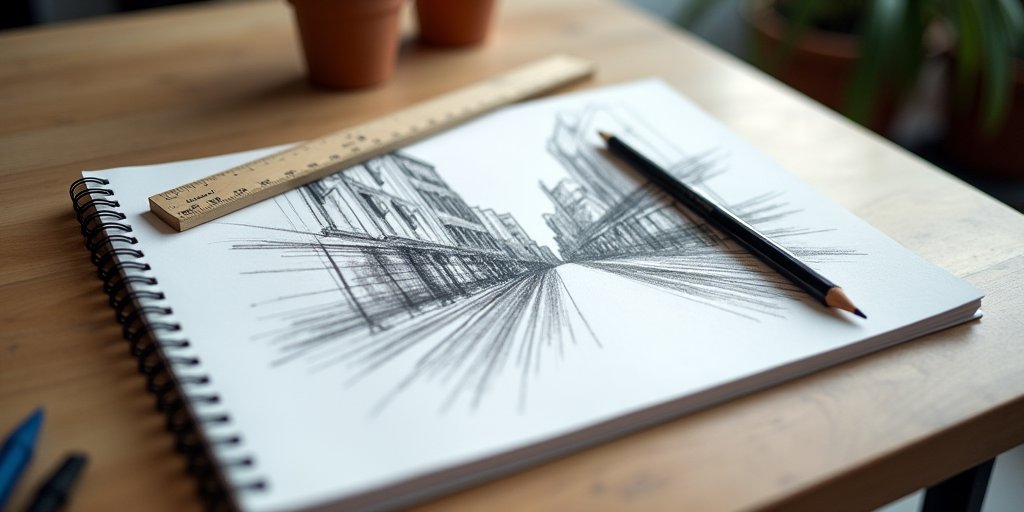
Drawing simple scenes using a single vanishing point trains your eye to consciously spot the cue instead of processing it invisibly. Art instructors have used this exercise for centuries, and research on visual perception suggests deliberate practice like this can sharpen conscious awareness of otherwise automatic depth processing. It takes repeated sessions before the pattern becomes easy to spot outside the exercise itself.
Testing Your Own Illusions
Looking at classic perspective illusions, like the Ponzo illusion, and predicting your own misjudgment before measuring it builds a more accurate internal model of when to distrust first impressions of depth. This connects closely to research on cognitive biases in visual perception. The caveat: the illusion will still work on you even after you understand it, because it operates below conscious control.
Frequently Asked Questions
Is linear perspective the same as depth perception?
No. Depth perception is the broader ability to judge distance and 3D structure, and linear perspective is just one cue that feeds into it, alongside things like shading, texture, and binocular vision.
Can linear perspective fool the brain into seeing false depth?
Yes — this is exactly how forced-perspective photography and illusions like the Ames room work. The brain trusts converging lines so strongly that it will misjudge real size and distance when the geometry is staged.
Do people with one eye still perceive linear perspective?
Yes, and quite effectively. Because linear perspective is a monocular cue, it doesn’t require binocular vision, which is why people with vision in only one eye can still judge depth reasonably well in everyday environments.
The Hallway Was Never Actually Narrowing
Go back to that long hallway. The walls were never leaning inward — your brain simply decided, in a fraction of a second and without asking your permission, that converging lines meant distance, and built a confident 3D world on top of that guess.
Linear perspective isn’t just an art-class technique; it’s a visible fingerprint of the brain’s constant, largely invisible work of turning flat light into lived space.
The next time a room, a photograph, or a stretch of highway seems to pull you toward some distant point, ask yourself: how much of what you’re “seeing” is really out there, and how much is your brain’s best guess dressed up as certainty?