
You replay it for the rest of the day. The cashier who snapped at you, the coworker who cut you off mid-sentence, the friend who went cold over text for no clear reason. You scan the last hour for what you did wrong. Here’s the uncomfortable part: you probably did nothing at all, and understanding why do people act mean for no reason means giving up the idea that it was ever really about you.
Why do people act mean for no reason usually happens when someone is carrying stress, pain, exhaustion, or an unmet need they can’t name in the moment, and it leaks out sideways onto whoever is nearby. The meanness is a discharge of internal pressure, not a verdict on the person receiving it.
The Psychology Behind Sudden Meanness
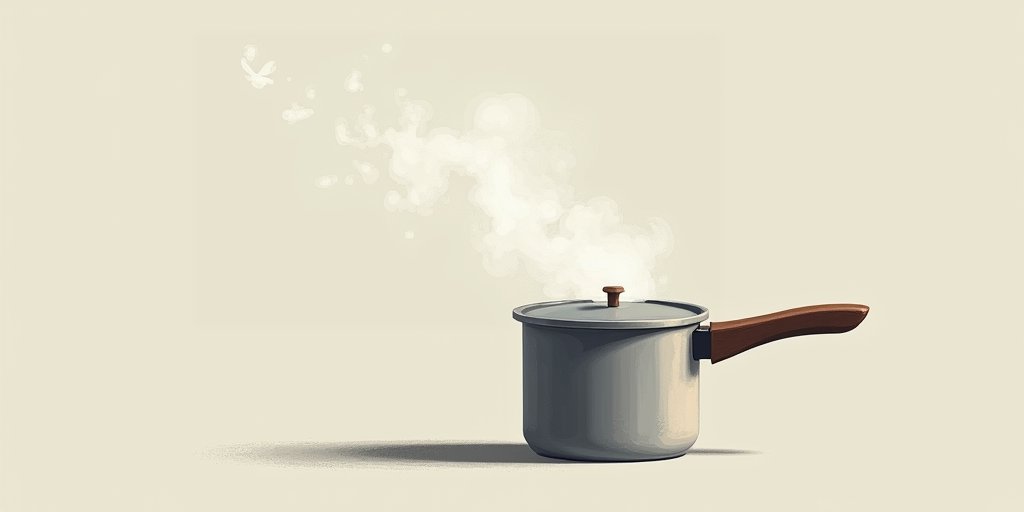
Psychologists call this displaced aggression: negative emotion generated in one situation gets expressed in an unrelated one, usually toward a safer or more available target. Research by Brad Bushman on catharsis and aggression has repeatedly found that people under emotional strain redirect hostility toward targets who had nothing to do with causing it. Think of it like a pressure cooker with a stuck lid — the steam still has to escape somewhere, and it rarely escapes at the source.
The common misconception is that meanness reflects a stable trait — “some people are just mean.” But most rudeness researchers, including Christine Porath, who has studied incivility extensively, find that a single unpleasant interaction is a poor predictor of someone’s character. The surprising finding: in workplace studies, people who’d experienced an earlier stressor were significantly more likely to be rude to a stranger within hours, even when the stranger was unrelated to the original stress entirely.
Where Random Meanness Shows Up

The Overwhelmed Parent
Maria snaps at the grocery store clerk over a coupon that won’t scan, her voice sharper than the moment warrants, jaw tight from a morning of three missed deadlines and a toddler who wouldn’t nap. The clerk becomes the outlet for frustration that has nowhere else to go. Neither of them registers, in that ten-second exchange, that the anger predates the interaction by hours.
The Silent Coworker
Devon stops responding to Slack messages after lunch, replies clipped when he does answer. He’s not annoyed at his teammate — he just got a review that rattled his sense of job security, and withdrawal feels safer than admitting it. His teammate spends the afternoon wondering what she did wrong.
The Short-Tempered Driver
Priya lays on the horn the second the light turns green, yells something she wouldn’t say to a stranger’s face. She’s fourteen minutes from a doctor’s appointment she’s dreading. The other driver never learns any of that context, only the horn.
What Most Explanations Miss
Here’s where it gets complicated: displaced aggression isn’t only about mood, it’s often about hierarchy. A meaningful amount of workplace incivility research shows that people are far more likely to direct frustration downward — toward those with less power or status — than toward the actual source of their stress, which is frequently a boss or authority figure they can’t safely confront. A mean person at the coffee counter may be responding less to random bad mood and more to an unconscious calculation about who is safe to be short with.
This is why strangers, service workers, and partners absorb disproportionate amounts of misplaced hostility: they’re accessible and low-risk, not because they provoked anything. The American Psychological Association’s research on workplace stress and incivility documents this downward-transfer pattern clearly, and it’s a nuance most advice articles skip entirely in favor of “they’re probably just having a bad day.”
How to Recognize This Pattern in Yourself

Here’s how to recognize when this dynamic is shaping your behavior:
- The delay effect: You notice your irritation spiked minutes or hours after the actual stressful event, aimed at someone unrelated to it.
- Target selection: You’re consistently sharper with people who can’t push back — a cashier, a partner, a younger sibling — than with the person who actually upset you.
- Disproportion: Your reaction is bigger than the triggering moment deserves, and some part of you notices that gap even as it’s happening.
None of these are character flaws. They are predictable responses to specific conditions.
- Physical carryover: You feel tension in your body — clenched jaw, shallow breath — before the “mean” moment even occurs.
- Immediate regret: You feel a flash of guilt right after, a sense that your reaction didn’t match the situation.
Recognizing this pattern isn’t about excusing meanness — it’s about locating the real source of it, which is usually more useful than assigning blame in the wrong direction.
What Actually Helps

Research points to specific approaches that can interrupt this pattern — though none are instant fixes.
Name the real source
Cognitive reframing — a core piece of CBT — works by explicitly separating the trigger from the target. Before reacting, ask yourself: “Is this about the person in front of me, or something from earlier?” This takes seconds but requires practicing it before you’re already in the reactive moment, not during it.
Build a pause point
Implementation intentions — deciding in advance “if I feel my jaw tighten, then I will take one slow breath before speaking” — reduce impulsive outbursts because the decision is made before the emotional spike, not during it. Studies on this technique, summarized in research from the American Psychological Association on emotion regulation, show it’s more effective than willpower alone. It doesn’t eliminate the stress underneath, only the sideways discharge of it.
Address the actual stressor
If frustration keeps leaking toward safe targets, the unresolved issue — a difficult boss, financial pressure, a hard conversation you’re avoiding — needs its own attention, not just downstream damage control. This is slower and less satisfying than a quick fix, but it’s the only approach that addresses cause rather than symptom. For more on managing chronic stress buildup, see how emotional suppression backfires over time.
Frequently Asked Questions
Why do people act mean for no reason toward someone they like?
Often because closeness makes someone feel safe enough to be careless with their emotions. Familiar relationships absorb more misplaced frustration precisely because the risk of losing them feels lower.
Is a mean person always dealing with something else?
Not always — some rudeness reflects genuine disregard or poor social skills. But research on displaced aggression suggests a single mean moment is far more often situational than a reliable sign of someone’s character.
Should I say something when someone is randomly mean to me?
You can, calmly and without absorbing blame — something like “that felt sharp, is everything okay?” This addresses the behavior without assuming you caused it, and often surfaces the real source.
It Was Never Really About You

Think back to that cashier, that cold text, that horn blast you couldn’t stop replaying. None of it was a verdict on your worth — it was stress finding the nearest exit.
Meanness without an obvious cause is almost never about the person receiving it; it’s about the pressure the other person was already carrying before you ever walked in.
The next time someone is inexplicably sharp with you, the more useful question isn’t “what did I do” — it’s “what is this person not telling me they’re carrying.”